Human health risk assessment of radionuclide contamination in drinking water
Keywords:
Radionuclides, Drinking Water, Health Risk Assessment, Reverse Osmosis, Cancer Risk, Monitoring Frequencies.Abstract
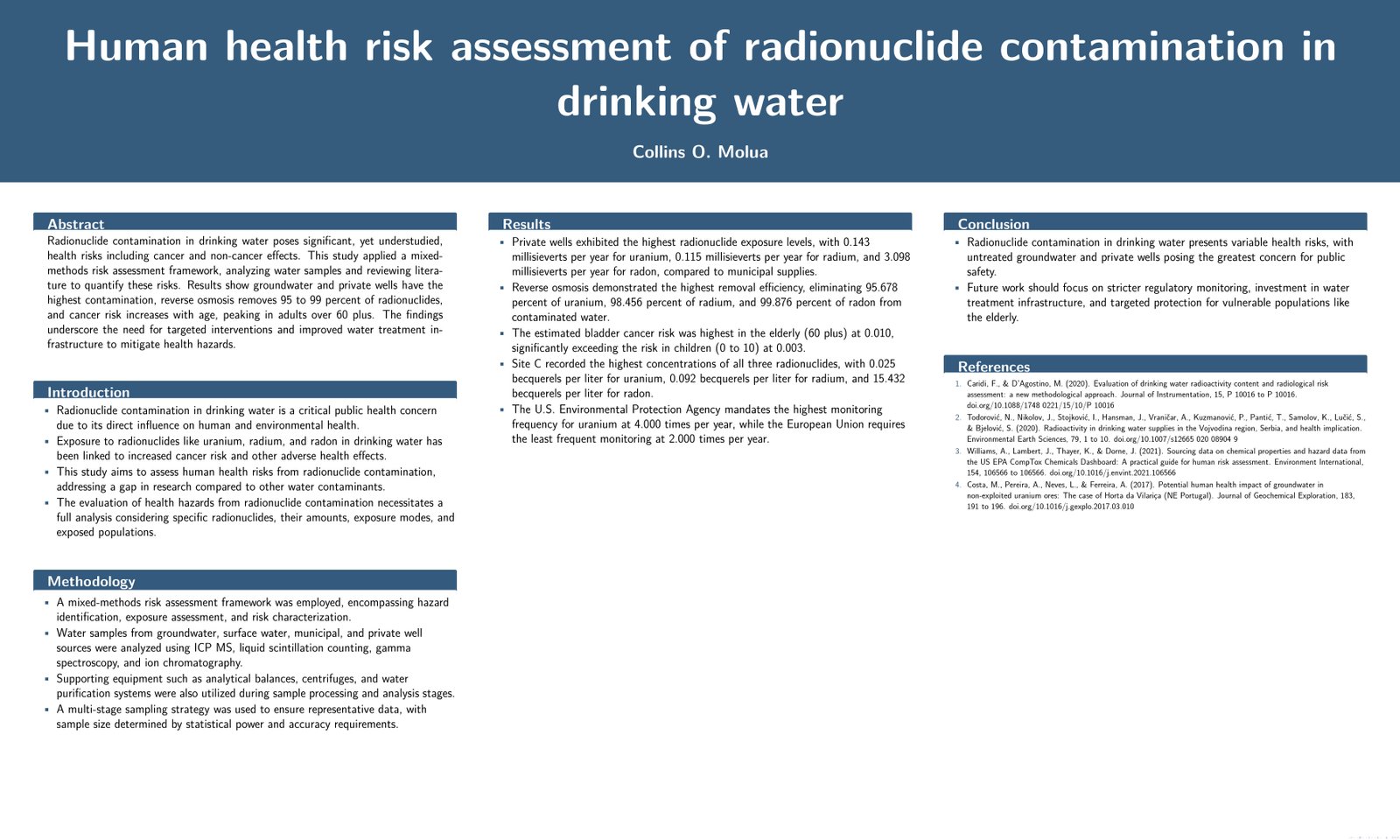
Background: Radionuclides such as uranium, radium, and radon can contaminate drinking water through natural geological processes and human activities including mining and nuclear operations. Long-term exposure, even at low levels, has been linked to increased cancer risk, yet human health risk assessment of radionuclide-contaminated drinking water remains understudied compared to other water contaminants. Objective: To assess human health risks, particularly cancer and non-cancer risks, associated with radionuclide contamination in drinking water, examining exposure pathways, affected populations, and treatment approaches for risk mitigation. Methods: A mixed-methods risk assessment framework was applied, incorporating hazard identification, exposure assessment, and risk characterization. Water samples from groundwater, surface water, municipal, and private well sources were analyzed using ICP-MS, liquid scintillation counting, gamma spectroscopy, and ion chromatography, alongside literature review and regulatory comparison. Results: Groundwater and private well sources showed the highest radionuclide concentrations and exposure levels, while municipal supplies and bottled water showed the lowest due to treatment processes. Reverse osmosis was the most effective treatment method for radionuclide removal (95–99% across uranium, radium, and radon). Estimated cancer risk (bladder, kidney, leukemia) increased with age, with the highest risk in adults over 60 and lowest in children. Conclusion: Radionuclide contamination poses variable health risks depending on water source type, with untreated groundwater and private wells representing the greatest concern. Investment in water treatment infrastructure, stricter regulatory monitoring, and targeted protection of vulnerable populations, particularly the elderly, are needed to reduce radionuclide-related health risks.
Published
How to Cite
Issue
Section
Copyright (c) 2024 Collins O. Molua

This work is licensed under a Creative Commons Attribution 4.0 International License.