Gut microbiome dysbiosis as a predictive marker for metabolic syndrome onset in overweight young adults: a prospective observational study
Keywords:
Gut Microbiome, Metabolic Syndrome, Dysbiosis, Young Adults, Predictive Biomarker, 16S RRNA Sequencing.Abstract
Background: Metabolic syndrome (Met-S) is a significant worldwide health burden, and it has been observed to increase prevalence among overweight youth adults.It is posited that emerging evidence indicates that a state of gut microbiome dysbiosis can be the antecedent to the clinical expression of the abnormal metabolism states; nevertheless, longitudinal prospective evidence on younger cohorts is scarce.
Objective: The goal of this study was to assess the ability of baseline gut microbiome composition as a predictive biomarker of Met-S onset during a 24-month follow-up period in overweight young adults.
Methods: A potentially observational pre-post cohort consisting of 210 obese adults (18-30 years) without Met-S at baseline was identified.At baseline, gut microbiome was profiled by 16S rRNA gene sequencing (V37V4hypervariable areas).Fasting blood glucose, lipid and blood pressure, waist and HOMA-IR were evaluated at baseline, 12 months and 24 months.The main result was incident Met-S with an International Diabetes Federation definition.Multivariate logistic regression and receiver operating characteristic (ROC) analysis and a multifaceted Combined Dysbiosis Index (CDI) was constructed and verified.
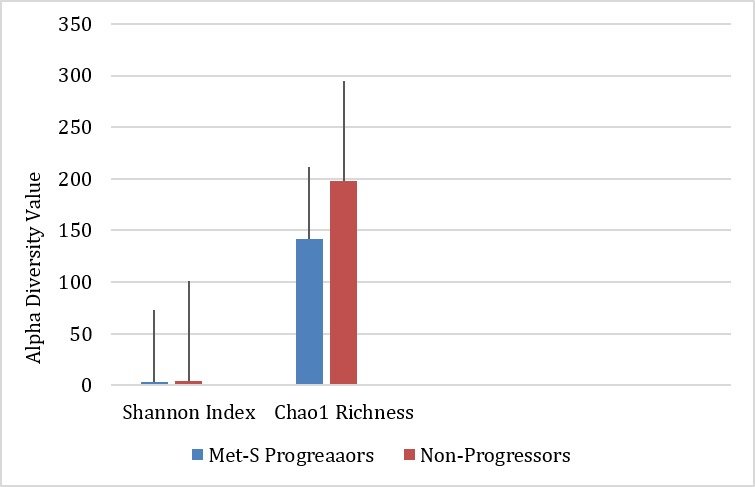
Results: A total of 58/24 months (27.6% Met-S developed) had significantly less alpha diversity (Shannon Index: 3.41 vs. 4.18, p<0.001), a higher Firmicutes/Bacteroidetes (F/B) ratio (3.82 vs. 2.21, p<0.001), and fewer AkkermansCDI, which combines various microbiome parameters, had an AUC of 0.88 (95% CI: 0.82 0.93) predicting Met-S, better than that of single clinical markers.Longitudinal findings demonstrated that there was gradual changes in microbial composition and metabolic parameters between groups.
Conclusion: Baseline dysbiosis of the gut microbiome is a strong independent predictor of the development of Met-S in overweight young adults. The CDI provides clinically translatable solution to early risk stratify, which can be used to integrate microbiome profiling in preventive metabolic healthcare.
Published
How to Cite
Issue
Section
Copyright (c) 2025 Dr. Omar Qahtan Yaseen

This work is licensed under a Creative Commons Attribution 4.0 International License.