Prospective study of psychosocial distress and perceived social support among patients undergoing radiotherapy for CNS tumours
Keywords:
CNS Tumours, Depression, Anxiety, HADS, MSPSS, Quality of Life.Abstract
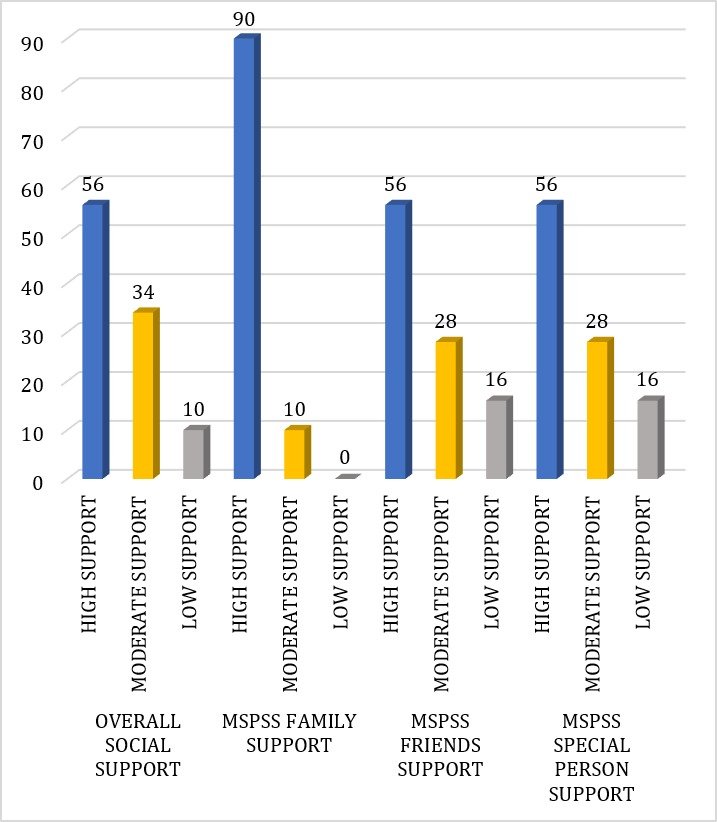
Background: Inadequate social support among patients undergoing radiotherapy for central nervous system (CNS) tumours can contribute to psychosocial distress, including depression and anxiety, which often remains undiagnosed. Objective: To evaluate perceived social support and psychosocial distress among patients undergoing radiotherapy for CNS tumours, to inform strategies that assist coping with treatment and improve quality of life. Methods: Prospective study of patients with radiotherapy-indicated CNS tumours. Social support was assessed with the Multidimensional Scale of Perceived Social Support (MSPSS), and depression/anxiety with the Hospital Anxiety and Depression Scale (HADS), at the first radiotherapy session, at completion of radiotherapy, and at two-month follow-up. Results: High social support was reported by 56% of patients, moderate by 34%, and low by 10%, with a statistically significant difference by age group (p<0.05). Borderline depression rose from 28% to 53% during treatment before declining to 32% at follow-up; overt depression rose from 18% to 47% then resolved by follow-up. Borderline anxiety fell from 46% to 44% before returning to 46%; overt anxiety rose from 20% to 56% and resolved at follow-up. Distress levels differed significantly by age group (p<0.05). Conclusion: Most patients with CNS tumours, especially receiving strong family support, perceived high overall social support, though those over 50 years reported inadequate support from friends and significant others. Depression and anxiety peaked at completion of radiotherapy and declined by follow-up. Routine screening and management of social support and psychosocial distress should be integrated into cancer care.
Published
How to Cite
Issue
Section
Copyright (c) 2023 Dr. Sangaiah Pillai Rajkumar

This work is licensed under a Creative Commons Attribution 4.0 International License.