Prospects for improving the microflora in diseases of the urinary tract encountered in gynecological practice
Keywords:
Microorganisms, Normal Microflora, Dysbiosis, Microbiota, Microbiome, Opportunistic Pathogens.Abstract
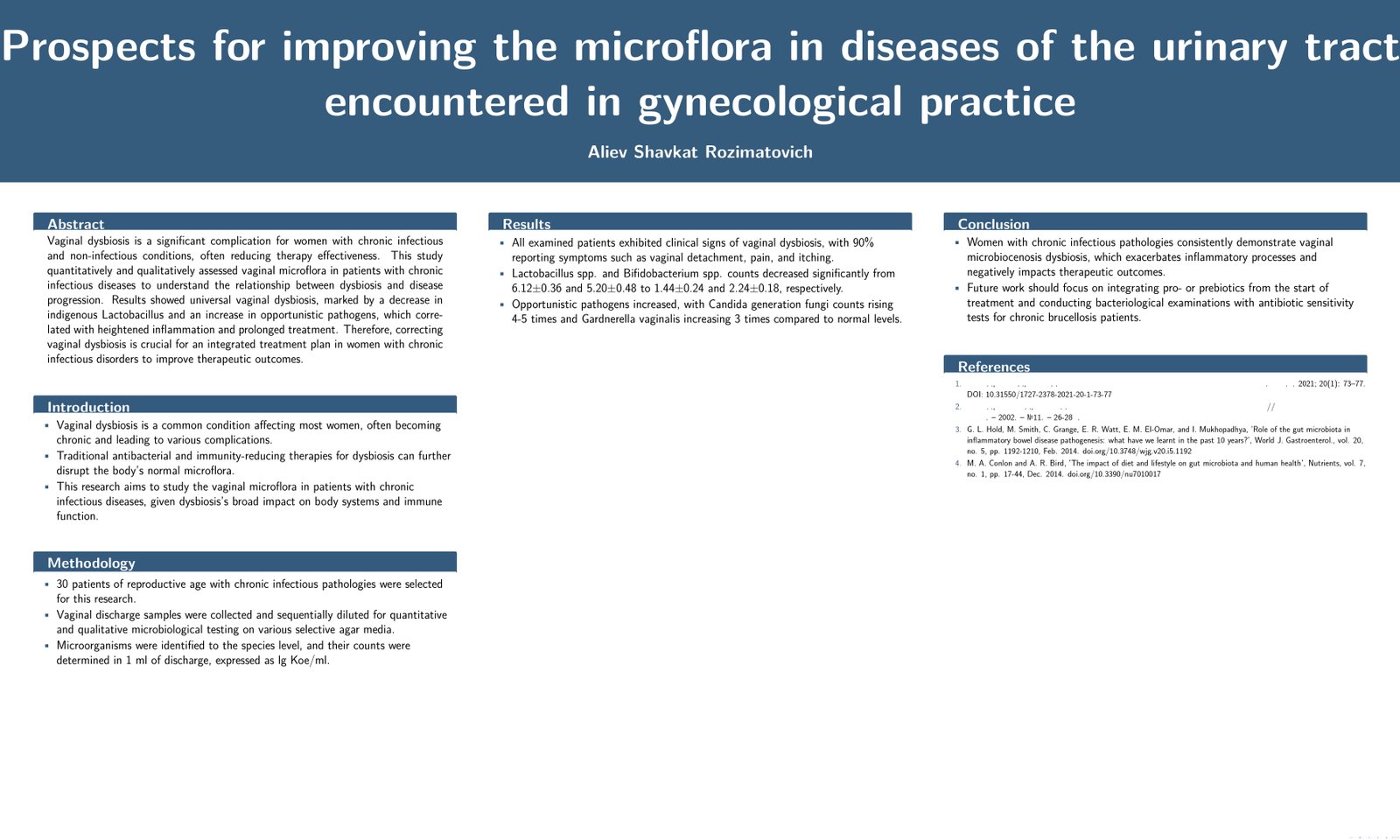
Background: Vaginal dysbiosis is a clinically important complication for women who have chronic infectious and non-infectious conditions. When the usual vaginal microbiocenosis gets disturbed, it can intensify the existing disease mechanisms and sort of reduce the real effectiveness of therapy, even if everything else is ok. Objective: The aim was to look at the quantitative and qualitative set of vaginal microflora in patients with chronic diseases, even when an infectious cause is present, and then to understand how vaginal dysbiosis may relate to disease progression. Methods: We evaluated the vaginal microbiocenosis using both quantitative and qualitative microbiological testing of the vaginal flora. The female patients were diagnosed with chronic pathological conditions, including chronic infectious diseases. We noted compositional changes in the indigenous microbiota plus the load of opportunistic pathogens and then compared them to the well-known normative parameters. Results: Vaginal dysbiosis was found in basically all participants. There was a steady decrease in indigenous Lactobacillus-dominant microflora, and it fell under normative thresholds, after which opportunistic pathogenic microorganisms showed a proportional increase in quantity. This microbial imbalance was tied to worse inflammatory activity in the genital structures that were involved. Also, the dysbiotic shifts seemed to play a role in prolonging the time of treatment and in promoting secondary inflammatory complications alongside the ongoing chronic disease, which is not a small thing. Conclusions: Women who have chronic infectious disorders show a noticeable disturbance of the vaginal microbiocenosis, it’s not just “minor”. Because of that dysbiotic situation, opportunistic pathogens can start to multiply more easily, they also strengthen local inflammatory reactions, and this then makes standard therapy less effective, often through secondary complications that show up later. So correction of vaginal dysbiosis should be seen as an essential part of a full, integrated treatment plan for these patients.
Published
How to Cite
Issue
Section
Copyright (c) 2023 Aliev Shavkat Rozimatovich

This work is licensed under a Creative Commons Attribution 4.0 International License.