Future well-being with digital health technologies
Keywords:
Digital Healthcare, Artificial Narrow Intelligence-Based Algorithms, Portable Diagnostic Devices, Virtual and Augmented RealityAbstract
Background: Digital health is a paradigm shift in the healthcare industry since the early 2000s, moving from the patient-physician relationship to a partnership. The COVID-19 pandemic has paved the way for the rapid adoption of digital tools in clinical practice all around the world.
Objectives: To explore possible future scenarios of digital health and how these relate to potential challenges of mainstreaming it into healthcare delivery.
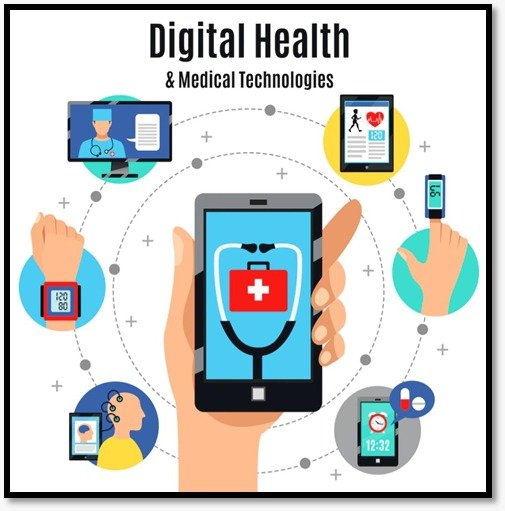
Methods: Prospective analysis and a narrative review of digital health technologies such as machine learning algorithms, mobile health applications, wearable sensors, portable diagnostic devices, and telemedicine platforms, in the context of traditional clinical care.
Results: Digital health technologies have significant promise to complement the traditional clinical history-taking, physical examination, differential diagnosis and therapeutic intervention paradigm. Turning the patient into the first point of care: artificial narrow intelligence-based algorithms and portable diagnostics enable diagnosis and treatment delivery that is not based on clinical settings. A major shift toward a conceptualization of "well-being" is taking place, with patients coming into the medical system in advance of the onset of symptoms. This requires preventive strategies based on broad patient-level information and study results from a population analysis.
Conclusion: In the next few years, digital health will be key healthcare advancements that will transform care and patient engagement. But there are significant concerns about the privacy of patient data, patient autonomy and freedom of choice and patient clinical safety when widely used. The ethical implications of technological advancements and their impact on healthcare systems and practitioners are still a pressing concern.
Published
How to Cite
Issue
Section
Copyright (c) 2023 Athmaja Shetty, Surinder Kaur, Yuktha HJ

This work is licensed under a Creative Commons Attribution 4.0 International License.